The Bachelor of Science in Bioinformatics is the first of its kind in the state of Tennessee. This interdisciplinary degree program integrates the fields of biology and computer science to prepare students to address real-world challenges in areas such as food security, plant and animal health, crop improvement, and disease and pest management.
The Future of Science Runs on Data – Be the One Who Leads It
Build Skills That Matter
Students in the bioinformatics major study various topics across the biological sciences, including genetics and genomics, molecular biology, and ecology while also gaining skills to analyze large biological datasets using cutting-edge computational tools. Additionally, students build career-ready skills through a required internship and research-based capstone project, gaining practical experience needed for immediate entry into the workforce or success in graduate school. Graduates of the bioinformatics program are uniquely equipped to lead in one of the most in-demand areas of science and technology.
Graduate with Career-Ready Skills
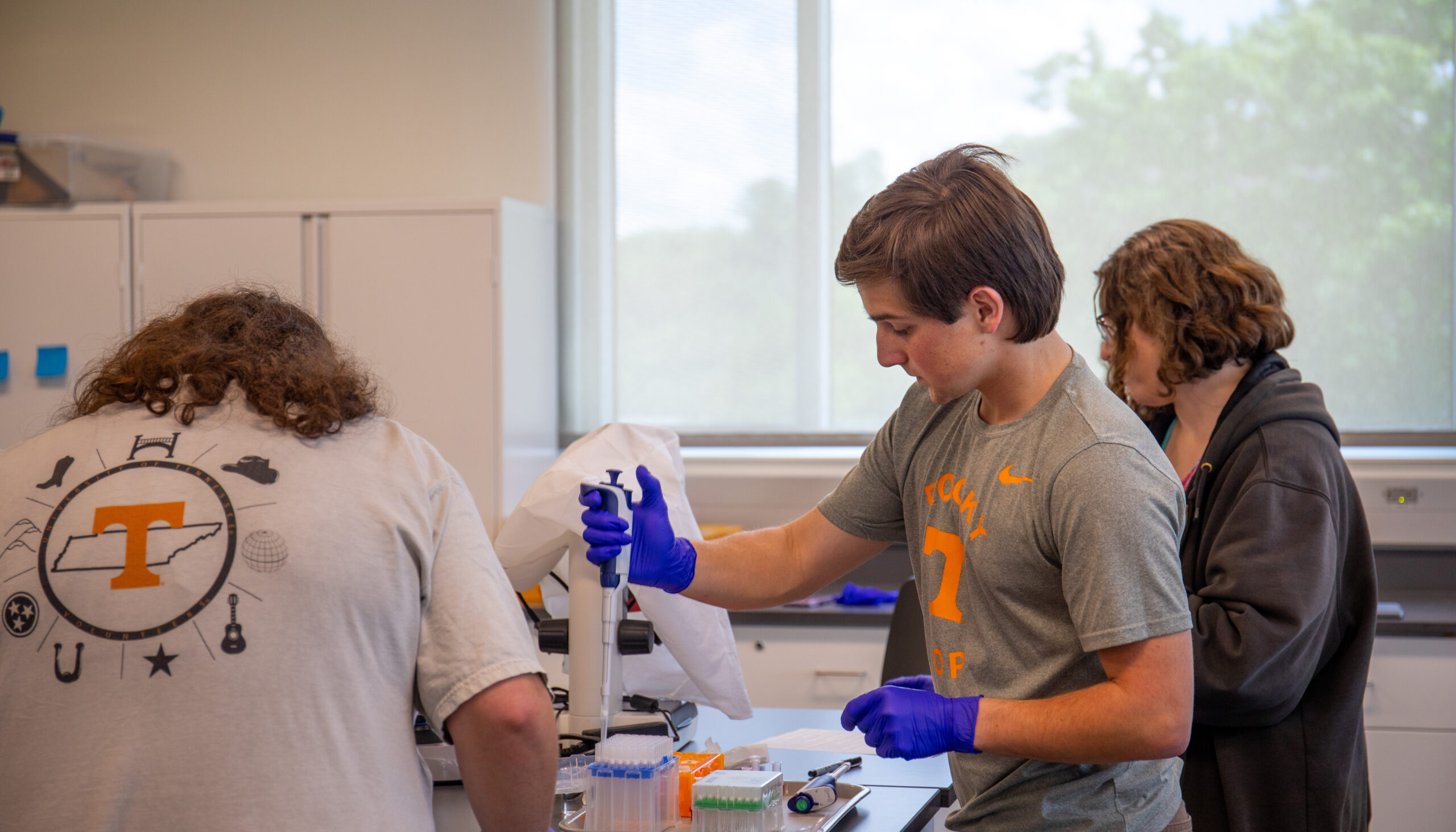
Student experiences are built around applying computational tools and advanced analytics to address challenges across different biological fields of study such as genomics, ecology, and environmental sciences. Unlike traditional biology or computer science degrees, students in the bioinformatics major will complete an internship and capstone project under the guidance of faculty in the Department of Entomology and Plant Pathology. Students will gain hands-on experience working with large-scale biological datasets, machine learning, genomics, artificial intelligence, and predictive modeling while exploring applications such as plant health, ecosystem conservation and environmental sustainability, natural resource management, food safety and security, veterinary science, and forensic science, among others.
Careers in Bioinformatics
A degree in bioinformatics prepares students for data analyst roles across all biological disciplines such as microbiology, genetics and genomics, plant and animal sciences, entomology and plant pathology, forestry, food science, and medical sciences. These roles typically lead to successful careers across:
- Agriculture
- Biotechnology
- Forestry
- Healthcare
- Environmental Consulting
- Government Agencies
- Science and Technology Industries
- Non-Governmental Organizations
- and more!
The U.S. Bureau of Labor Statistics projects employment in data science-related fields to grow by 36% over the next decade, making it one of the fastest-growing workforce sectors in the nation.
Contact

